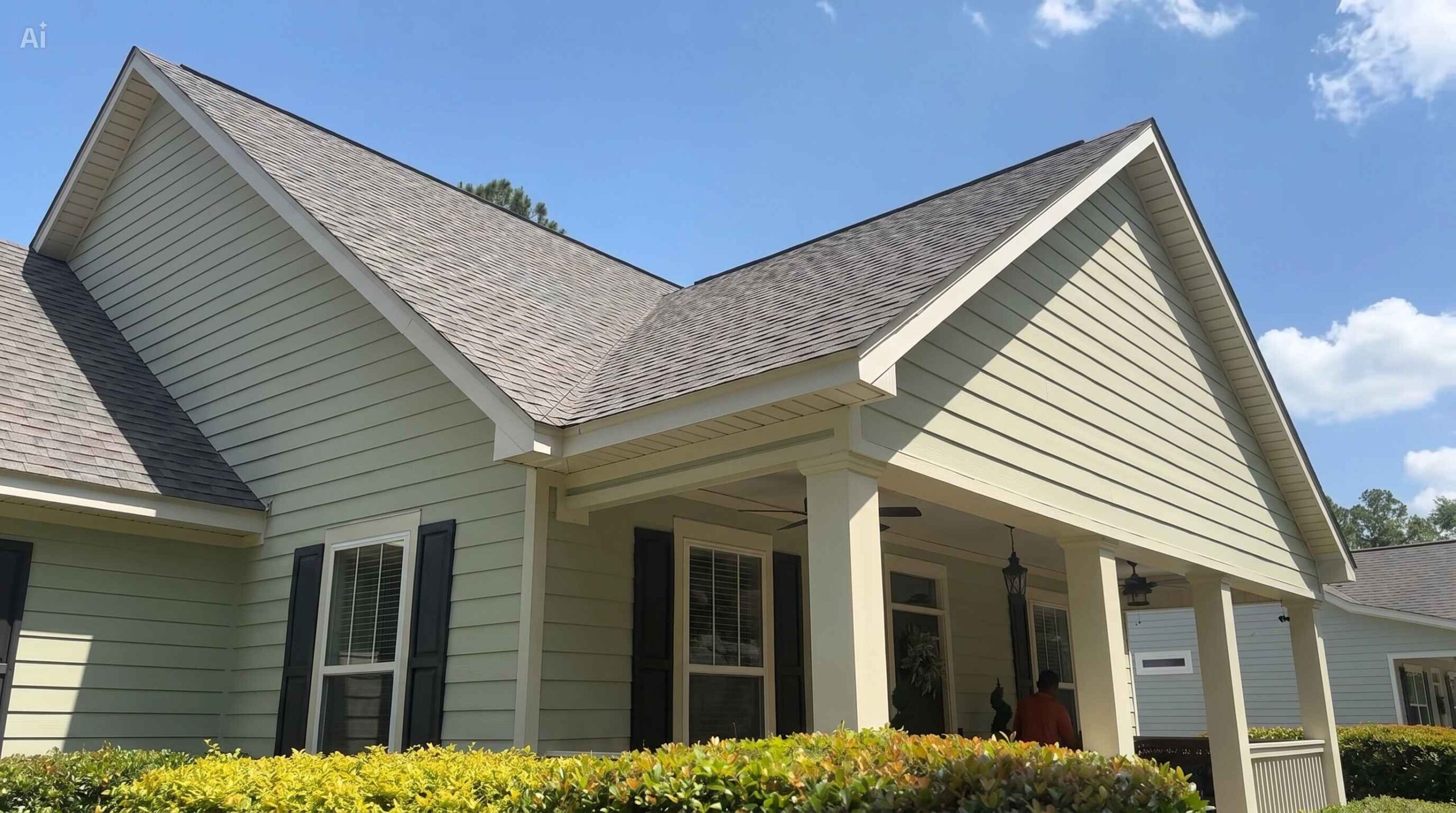
Manufactured Home Roofing Alabama
Manufactured and mobile homes need a different roofing approach than site-built homes — different structural loads, different tie-down interactions, different insurance requirements. MAC Construction has handled both for 34 years across the Wiregrass.
Get Your Free Roofing Estimate
Manufactured & mobile home specialists.
Is Manufactured Home Roofing Different From a Regular Roof?
Yes. Manufactured and mobile homes have different structural framing, roof-load limits, and tie-down anchoring systems than site-built homes, which affects both installation method and insurance requirements. MAC Construction, licensed since 1991 (AL #30154), provides manufactured and mobile home roof replacement and repair across the Wiregrass with the same binding written quote and 5-year workmanship warranty as every other service.
Page Summary — Last Verified July 2026
This page covers manufactured and mobile home roofing in Alabama — what makes it different, Alabama tie-down and insurance considerations, and how MAC Construction handles both replacement and repair.
- Manufactured housing serves nearly half a million Alabama residents statewide
- Alabama requires compliant tie-down/anchoring systems, verified by the Alabama Manufactured Housing Commission
- Same binding-quote process and 5-year warranty as every MAC Construction service
Manufactured housing figures from the Alabama Manufactured Housing Association. Business figures from MAC Construction's own records and current Google Business Profile (4.9★, 106 reviews, verified July 2026).

Roofing That Understands Manufactured Homes
Manufactured and mobile housing serves nearly half a million Alabama residents statewide, and it's a meaningful part of the rural Wiregrass housing stock. Most roofing companies treat these homes as an afterthought rather than genuinely understanding manufactured home roofing Alabama requires — applying site-built techniques that don't account for lighter framing, different roof pitches, and tie-down systems that interact directly with the roof structure.
"A manufactured home roof isn't a smaller version of a regular roof — it's a different structural system, and treating it like one causes real problems: voided tie-down compliance, insurance denials, and roofs that fail faster than they should."
Manufactured Home Roofing Alabama — Key Differences
HUD Wind Zones — What Houston County Is Actually Rated For
Manufactured homes aren't built to the same code as site-built homes. Since 1976, they've been governed by a single federal standard — the HUD Manufactured Home Construction and Safety Standards (24 CFR Part 3280), commonly called the HUD Code — which overrides local building codes rather than working alongside them. Wind resistance is assigned through three federally-defined Wind Zones:
The Three HUD Wind Zones
- Wind Zone I — 70 mph: the baseline standard, covering most of the interior United States
- Wind Zone II — 100 mph: inland areas near hurricane-prone coastlines
- Wind Zone III — 110 mph: immediate Gulf and Atlantic coastlines, including coastal Alabama
One technical detail almost never explained: HUD's wind speeds are measured as "fastest-mile" wind speed, an older measurement standard — not the "3-second gust" standard used in modern ASCE 7 and the International Residential Code that governs site-built homes in the same county. The two scales aren't directly interchangeable, which is part of why manufactured and site-built wind ratings can look inconsistent when compared side by side without accounting for the difference.
Why the 1994 Build Date Matters More Than Most Buyers Realize
HUD's original 1976 code was amended in 1994 with substantially stricter wind engineering requirements. A University of Florida study examining manufactured home performance in tornado and hurricane events found that homes built to the post-1994 standard performed as well as, and in some respects better than, comparable site-built homes in the same storms. Pre-1994 homes were not built to this standard and were not retroactively required to meet it. If you're roofing an older manufactured home, that build date changes what "matching the existing structure" actually means.
Finding Your Home's Actual Rating
Every HUD-code home carries a red metal HUD Certification Label on the exterior near each section's rear, and a data plate — usually inside a kitchen cabinet, bedroom closet, or electrical panel door — listing the specific Wind Zone, Roof Load Zone, and Thermal Zone the home was engineered for. Alabama falls in the South Roof Load Zone (20 pounds per square foot design load) statewide. A roofing contractor who doesn't check this before starting work is guessing at your home's actual structural capacity rather than confirming it.
Multi-Section Homes: The Marriage Line and Your Roof
If your home is a double-wide, triple-wide, or larger multi-section unit, it was delivered to the site in separate pieces and joined at what's called the marriage line — the seam where sections connect. This isn't just a cosmetic joint. The roof sections on either side of that line are physically fastened together, typically using toed fasteners driven through the roof sheathing or through the roof beams from inside the attic space, and the entire seam is sealed with a continuous gasket to maintain both a weather barrier and an air barrier.
Signs of Marriage Line Roof Trouble
- A hairline crack running the length of a ceiling, following the seam between sections
- A stain or soft spot in the ceiling directly along the centerline of the home
- Visible separation or a step where the two roof sections meet at the ridge
- Gasket material that's cracked, compressed, or missing where the roofline meets at the seam
This is a genuinely different failure mode than anything found on a site-built roof, and it's specific to multi-section manufactured homes — which is exactly why we check it directly rather than treating a manufactured home roof as a smaller version of a standard one.
Insurance & Tie-Down Considerations
Alabama requires manufactured homes to have properly installed tie-downs and frame anchors, overseen by the Alabama Manufactured Housing Commission. Homes without compliant anchoring can be denied insurance coverage entirely, and roofing work that disturbs or doesn't account for the anchoring system can create compliance problems that surface later — often at the worst possible time, during a claim.
What We Check Before Any Manufactured Home Roof Job
- Tie-down and anchor condition, so roof work doesn't compromise compliance
- Current roof pitch and structural framing capacity for the material being installed
- Whether your policy is a standard HO-7 manufactured home policy with its own roof-condition requirements
- Age and condition thresholds some insurers use specifically for manufactured home roofs
Manufactured homes are also frequently more exposed to wind-resistance concerns than site-built homes in the same storm — worth reviewing alongside our FORTIFIED roofing options if you're planning a full replacement.
Manufactured Home Roofing Alabama Services
Roof Repair
Leak repair, seam sealing, flashing
Full Roof Replacement
Depends on size and material
Coating & Sealing
Extends life without full replacement
Free Inspection
Tie-down and roof condition check
Final pricing depends on the actual condition and size found on-site. Every estimate is written and binding before work begins.
Manufactured Home Roofing — Your Questions Answered
Yes. What manufactured home roofing Alabama actually requires is different structural framing, roof-load limits, and tie-down anchoring systems than site-built homes. Roofing work needs to account for these differences to avoid compromising the home's insurance eligibility or structural integrity.
It can, if not handled carefully. MAC Construction checks tie-down and anchor condition before any manufactured home roof job to make sure the work doesn't compromise compliance with Alabama Manufactured Housing Commission standards.
Often yes — many manufactured homes carry an HO-7 policy, which can include different roof-condition requirements than standard homeowners insurance. Check your specific policy for exact terms.
Typically $4,500–$12,000 depending on home size and material, with repairs running $300–$3,500. You'll receive a written, binding quote before any work begins.
Yes. MAC Construction holds Alabama Contractor License #30154, active since 1991 and verifiable on the Alabama Home Builders Licensure Board website.
Houston County is designated HUD Wind Zone I (70 mph), per the Alabama Manufactured Housing Commission's official wind zone map — the same as nearly every Alabama county except coastal Mobile and Baldwin. Check your home's HUD data plate to confirm which zone your specific home was engineered for.
The marriage line is the seam where a multi-section (double-wide or larger) manufactured home's sections are joined, including a fastened and gasketed roof connection. It's a common source of hard-to-trace leaks if not properly maintained or if disturbed by roofing work that doesn't account for it.
Free Manufactured Home Roofing Estimate
Written quote · Stephen responds directly
What Wiregrass Homeowners Say
⭐ See All Reviews ↗"Mac construction is owned and operated by a true Christian family. They do quality work at a very good price. They are very professional and you will enjoy their crew doing your work."
"Excellent communication throughout the contracting and installation phases. They were on time and very professional with onsite project management. Exceptional clean up as well. I highly recommend them as a roofing contractor!"
Credentials You Can Verify Yourself
Verify any Alabama roofing contractor directly at the Alabama Home Builders Licensure Board before signing anything.
MAC Construction
Dothan, AL 36305
Explore More Roofing Services
🔨 Related Services — Dothan AL
🏢 MAC Construction
A Roof That Respects How Your Home Is Built.
Free estimate. Binding written quote. 5-year workmanship warranty. Real manufactured home roofing Alabama families can trust.
AL License #30154 · 34+ Years · 4.9★ Google · 106 Reviews